
1,100 species, from flamingos to the Shoebill Stork
Kenya alone holds 11% of the world's bird species. Some birding trips record over 500 sightings in a single visit.
A hundred species, possibly in a single day
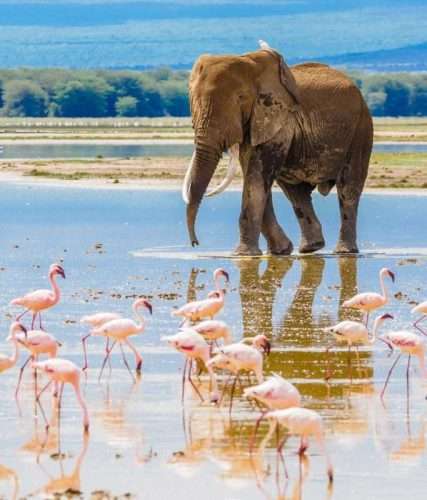
Great white pelicans, storks and vivid pink flamingos share the skies with vultures and raptor eagles, while ibis, herons and starlings fill the trees and lakeshores below.
Savannah, forest and wetland habitats each support their own specialists - bee-eaters, sunbirds, cranes and fish eagles among them - making a single day's birding remarkably varied.
Plan a birding safari
1,100 species - 11% of the world's total
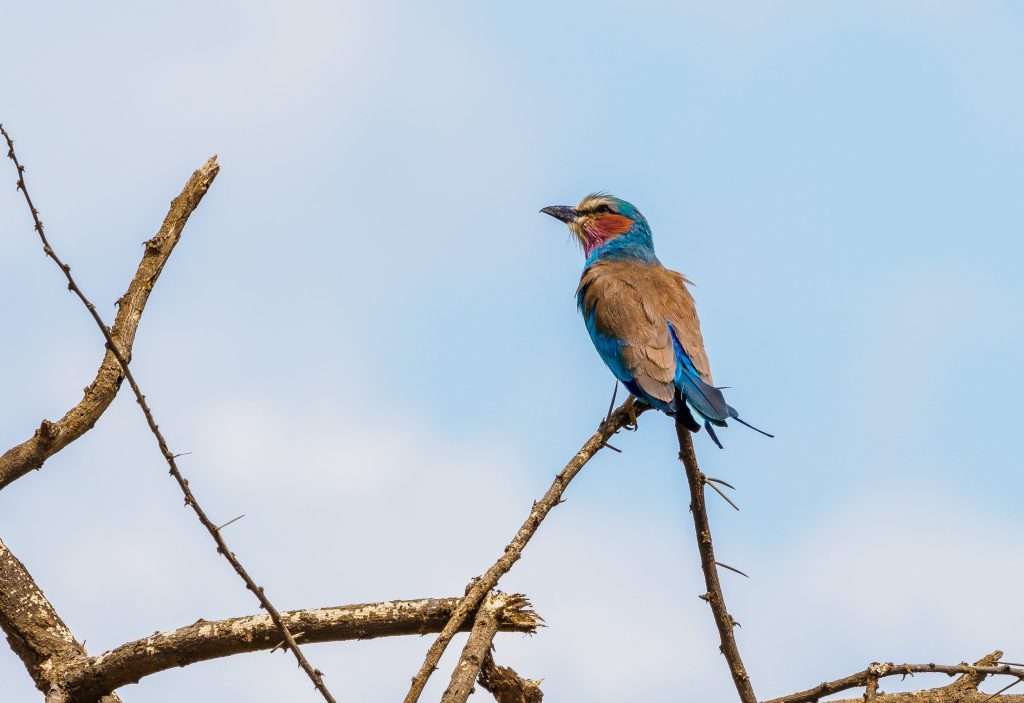
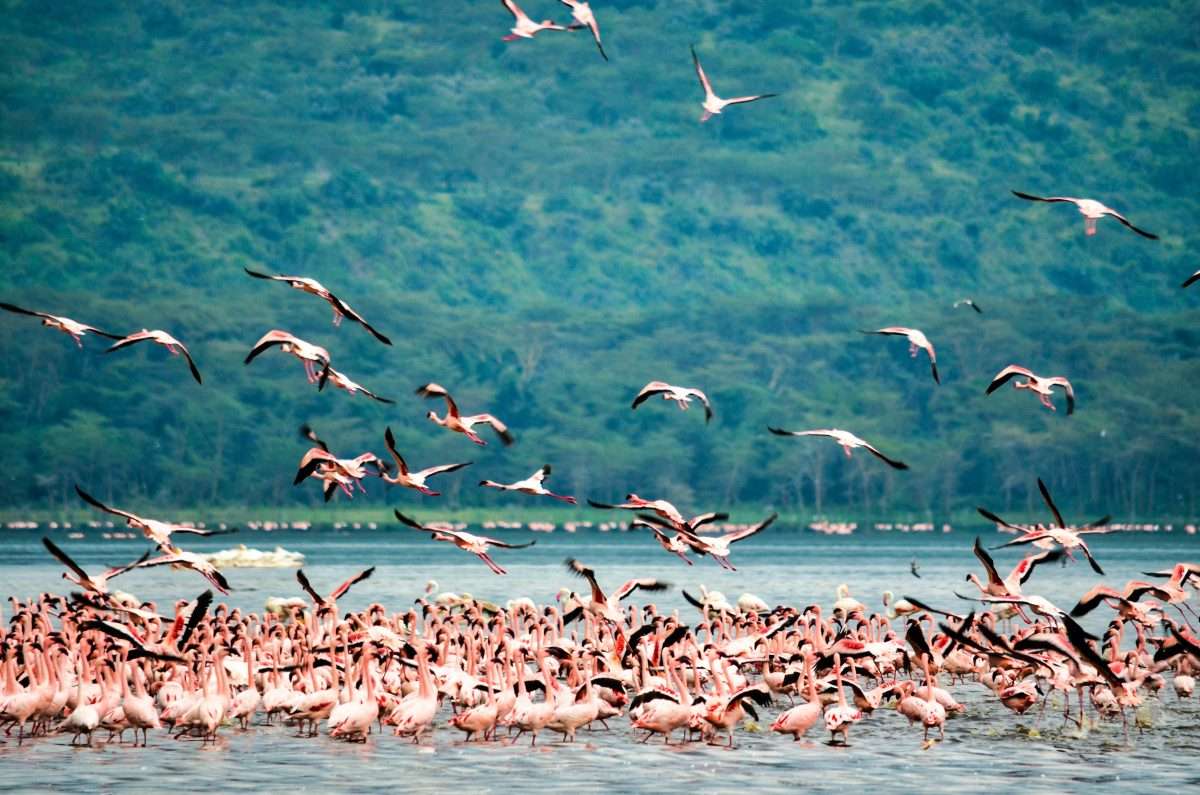
The Masai Mara offers the Lilac-breasted Roller, African Fish Eagle and Secretary Bird alongside vultures and waterfowl. Lake Nakuru alone has recorded over 450 species, led by its famous flamingo flocks.
Amboseli adds the Grey Crowned Crane and Von der Decken's Hornbill against a Kilimanjaro backdrop. Migrant species arrive February through October, and the June-October dry season concentrates birds near water for easier viewing.
Over 1,100 species, alongside the big cats
The Serengeti holds the Kori Bustard, Grey-breasted Spurfowl and endemic Fischer's Lovebird. Ngorongoro Crater adds the Von der Decken's Hornbill and Wattled Starling across its varied habitats.
Lake Manyara is a flamingo stronghold, also home to African Fish Eagles and Crowned Hornbills - a rewarding stop for birders travelling between other Tanzania parks.
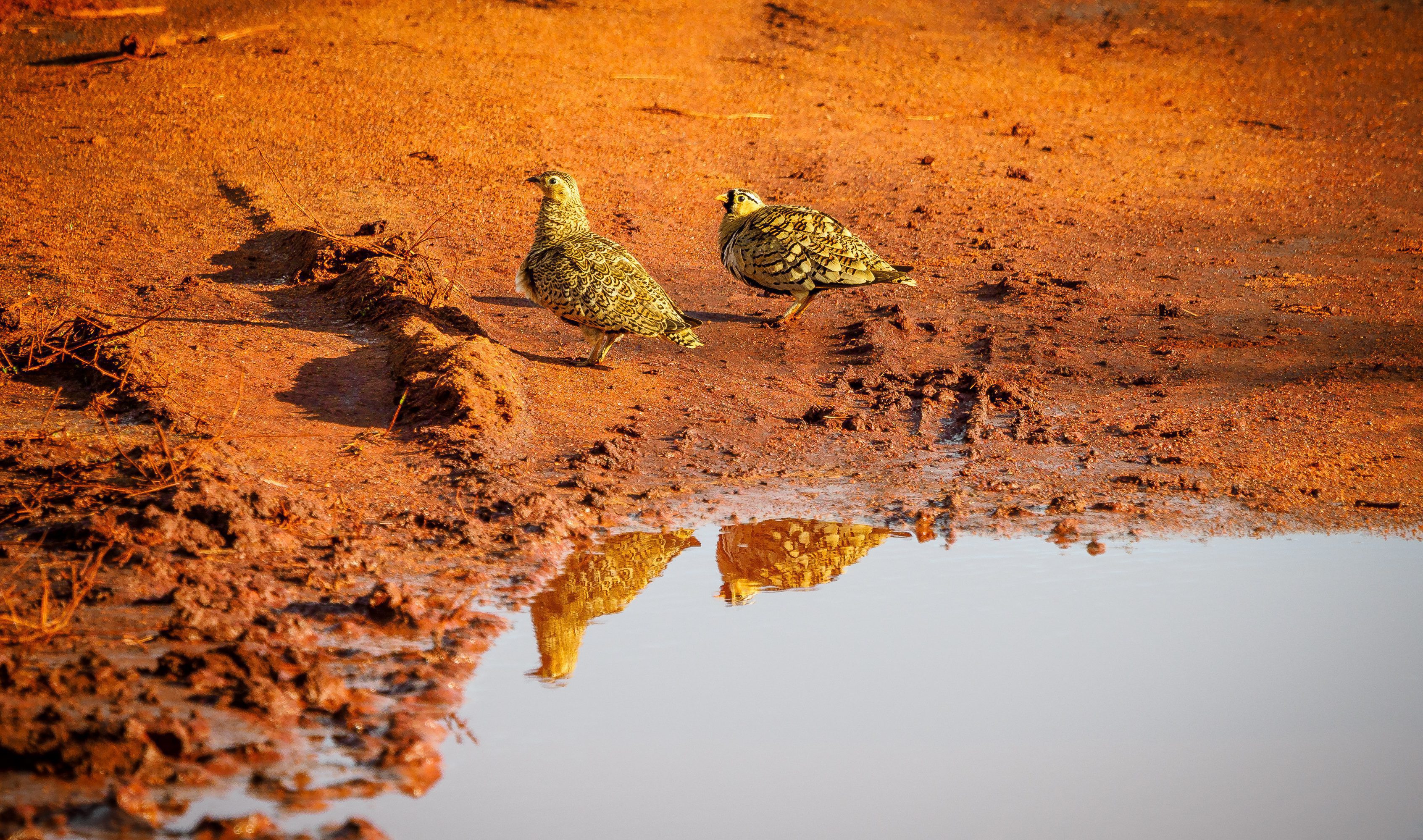
The Shoebill Stork - a prehistoric-looking rarity
This elusive, papyrus-swamp dweller with its distinctive shoe-shaped bill is one of East Africa's most sought-after sightings. The African Skimmer, with its uneven bill, is a similarly scarce find along rivers and lakes.
Forest habitats hold their own rewards too - the vividly plumed Ruwenzori Turaco among them, for birders willing to venture into the greener corners of the region.
Kit for a proper birding safari
We supply Olympus binoculars for every group, plus a pop-top roof vehicle for an unobstructed view.
Bird watching safaris - your questions answered
How many bird species can I see in Kenya and Tanzania?
Kenya holds over 1,100 species - about 11% of the world's total. Tanzania has a similarly rich count. Strong single trips have recorded over 500 sightings.
What are the best parks for birding?
In Kenya: Masai Mara, Lake Nakuru and Amboseli. In Tanzania: the Serengeti, Ngorongoro Crater and Lake Manyara - each with a distinct set of specialist species.
When is the best time for bird watching?
Wet seasons (March-May, November-December) bring migratory birds and breeding plumage. Dry seasons (June-October, January-February) concentrate birds near water, making them easier to spot.
Are binoculars provided?
Yes - we supply Olympus binoculars for every group. Bringing your own is still a good idea for the instant access it gives you.
What rare birds might I see?
The Shoebill Stork and African Skimmer are two of the region's rarest and most sought-after sightings, found in specific wetland and river habitats.
What vehicle is used for birding safaris?
A pop-top roof 4x4, giving you an unobstructed standing view for spotting birds in flight or perched in treetops, guided by our expert driver-guides.