
Tanzania holds the oldest human footprints on Earth
This is the country where Mary and Louis Leakey rewrote human history, where a volcano's collapse left the world's largest intact caldera, and where a lake so alkaline it calcifies dead animals somehow supports the planet's largest flamingo breeding colony.
Olduvai Gorge — where "Handy Man" was found
In 1959, Mary Leakey uncovered a 1.75-million-year-old hominid skull in this ravine on the edge of the Serengeti plains — a find that shifted the accepted birthplace of humanity to East Africa. The gorge has since yielded fossils spanning nearly 2 million years of human evolution.
In 1964 the Leakeys named a new species found here Homo habilis — "Handy Man" — the earliest known maker of stone tools. Nearby at Laetoli, footprints preserved in volcanic ash show an upright-walking hominid crossed this land 3.6 million years ago.
Ngorongoro — the world's largest intact caldera
Around 2.5 million years ago, a volcano roughly the height of Kilimanjaro erupted and then collapsed in on itself, leaving a caldera — a giant volcanic bowl — 260 km² wide and 610m deep. Unlike most calderas, this one never eroded away, staying almost perfectly intact.
The crater floor traps water and grass year-round, supporting an estimated 25,000 large animals in a permanent, self-contained ecosystem — one of the highest densities of wildlife anywhere on the planet, including some of Tanzania's last black rhinos.
"Ngorongoro is often called Africa's Garden of Eden — a crater so complete it functions as a world within a world."— Africa Kenya Safaris · Est. 2006
Lake Natron — beautiful, alkaline, and deadly to most life
Lake Natron sits in a volcanic basin fed by mineral-rich hot springs, reaching a pH of up to 10.5 — caustic enough to burn the skin and eyes of most animals. Its high salt content feeds red-pigmented algae and salt-loving bacteria that tint the water a deep, blood-red colour, especially in the dry season.
Remarkably, this hostile lake is the single most important breeding site on Earth for the lesser flamingo — over 2.5 million birds nest on its salt islands, safe from predators that can't survive the alkaline shoreline. Animals that die in the water can become mineral-coated and preserved, giving rise to eerie "calcified" carcasses photographed along its edges.
Kilimanjaro — the world's tallest free-standing mountain
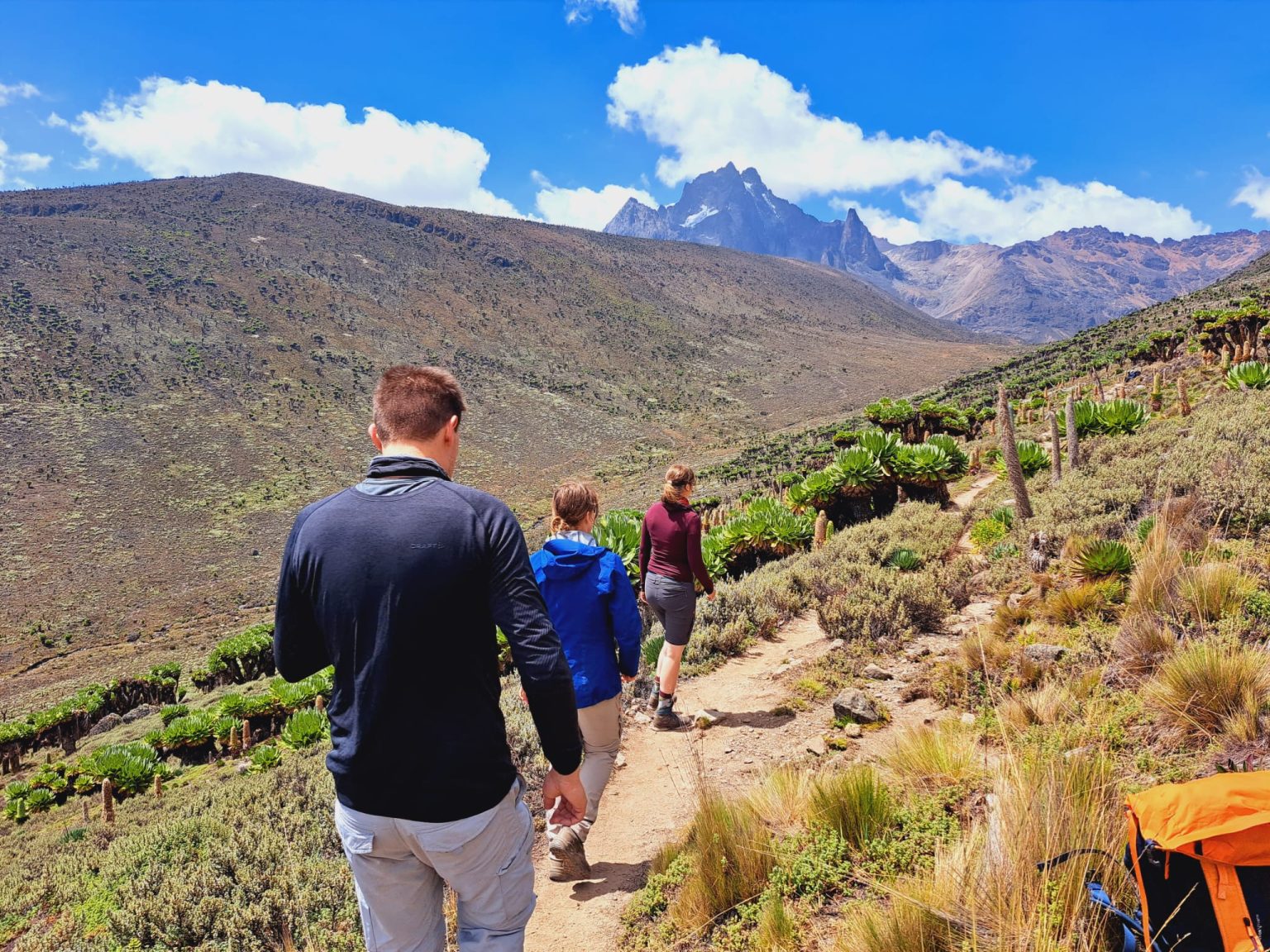
At 5,895m, Kilimanjaro is the highest point in Africa and the tallest mountain on Earth not part of a range — rising straight from savannah plains near sea level to its icy summit, with almost no neighbouring peaks.
Climbing it takes you through five distinct climate zones in under a week: farmland, rainforest, moorland, alpine desert, and finally arctic ice — the same climatic range you'd cross travelling from the equator to the North Pole, compressed into one mountain.
Zanzibar — where Africa, Arabia and India meet
An archipelago with over a thousand years of trade history, a UNESCO old town, and the origin of the global clove trade.
 Stone Town
A living museum of Swahili trade
Stone Town's coral-stone buildings, carved wooden doors and narrow alleys reflect centuries of Arab, Persian, Indian and African influence — a UNESCO World Heritage Site since 2000.
Spice Islands Once the world's clove capital
By the 1800s, Zanzibar produced most of the world's cloves. Spice farm tours today let you smell, touch and taste cinnamon, nutmeg, cardamom and vanilla growing wild.
 Jozani Forest
Home to a monkey found nowhere else
Jozani Forest protects the Zanzibar red colobus monkey — an endangered species found only on this island, alongside mangrove boardwalks through the last of Zanzibar's native forest.
Tanzania's remarkable linguistic unity
Tanzania is home to more than 120 ethnic groups — one of the highest counts in Africa — yet it is unusually unified linguistically. Swahili, not any single tribal language, is the national tongue, deliberately promoted after independence in 1961 to build one shared Tanzanian identity above ethnic lines.
That policy is widely credited with helping Tanzania avoid the ethnic conflict seen in some neighbouring countries. Today Swahili is spoken by nearly the entire population as a common second language, alongside English and each community's mother tongue.